
Grade 9 Health and Physical Education · Lesson 2.1
Body Systems and Exercise
Unit 2: Health and Physical Fitness
The human body is made of systems that work together, and exercise affects all of them. The main systems involved in physical activity are the muscular, skeletal, cardiovascular (circulatory), respiratory and nervous systems. Understanding how they respond helps us train safely and effectively.
Key terms
- Cardiovascular system
- heart, blood vessels and blood that transport oxygen and nutrients
- Respiratory system
- organs that take in oxygen and remove carbon dioxide
- Heart rate
- number of heartbeats per minute
- Stroke volume
- amount of blood pumped by the heart in one beat
- Cardiac output
- amount of blood pumped per minute
- Short-term effect
- immediate response to exercise
- Long-term effect (adaptation)
- lasting change from regular training
Key formulas
Summary
- Muscular, skeletal, cardiovascular, respiratory and nervous systems all respond to exercise.
- Short-term: heart rate, breathing and body temperature increase.
- Long-term: stronger heart and muscles, denser bones, lower resting heart rate.
- Exercise also improves mood and coordination.
In everyday life: Many Ethiopian runners train at altitudes above 2,000 m, around places such as Bekoji, Sululta and Entoto, where the body adapts by making more red blood cells.
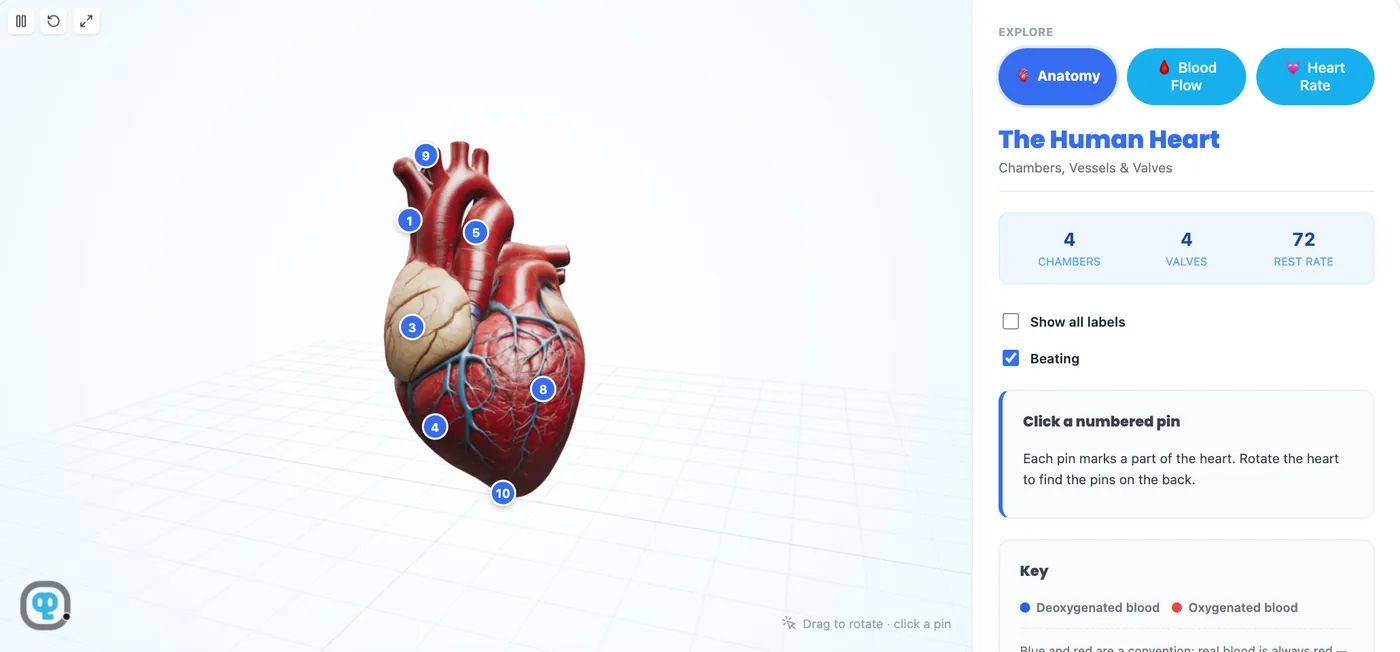
Try it in a virtual lab
Check yourself
- Name three body systems affected by exercise.
- Why does heart rate increase during exercise?
- What is a long-term effect of training on the heart?
- How does altitude training help endurance athletes?
Practice questions
1. Regular endurance exercise causes the resting heart rate to:
- A. Increase greatly
- B. Decrease
- C. Stop
- D. Stay always above 150
Show answer
Answer: Decrease
A trained heart pumps more blood per beat (stroke volume), so it needs fewer beats at rest.
On WeLearn
The full lesson: reading notes, worked examples, class activities and the Unit 2 quiz
Study Body Systems and Exercise on WeLearnTeach Body Systems and Exercise with WeLearn
We will bring a demo to your school: a lesson on your interactive TV, a virtual lab and a classroom game, with your own teachers.