A practical lesson is not about the equipment. It is about a way of thinking: students predict what will happen, observe carefully, measure, and then explain the result using the theory. You can teach that cycle without a fully equipped laboratory.
Start with the question, not the apparatus
Before you show anything, give the class one clear question to answer. For example:
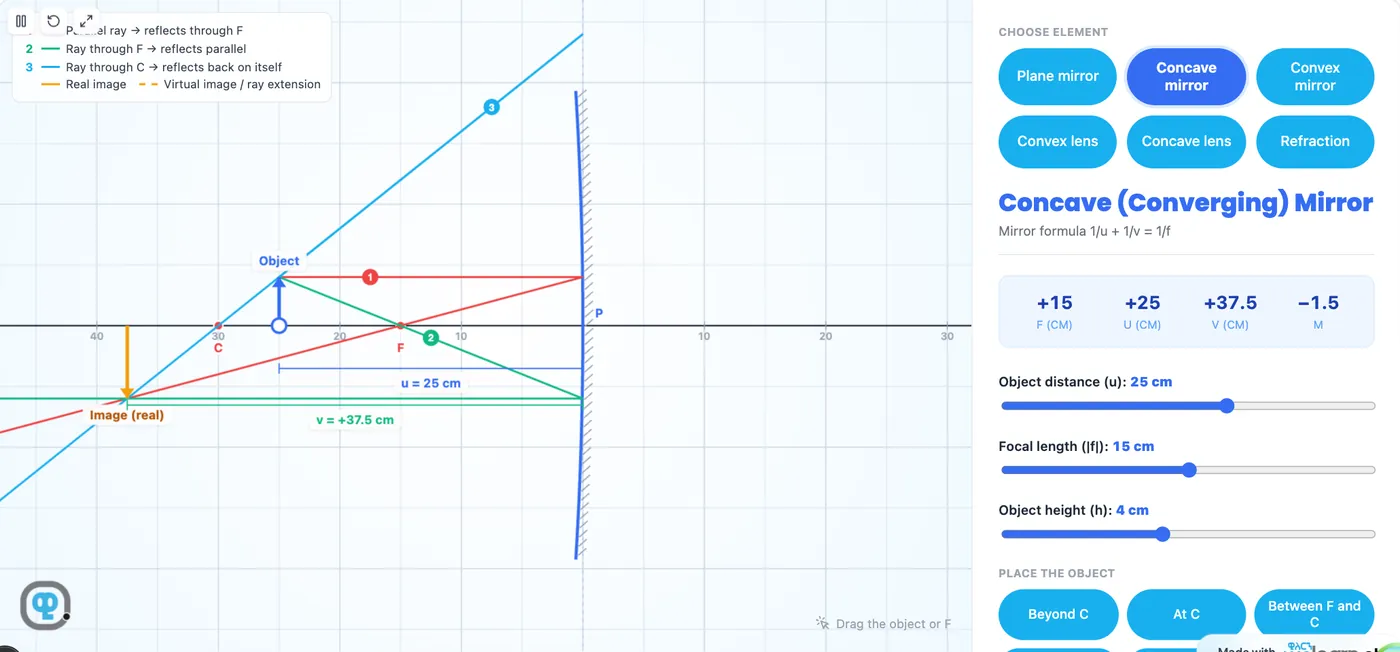
- Where will the image form if I move the object closer to a concave mirror?
- What happens to the current when I add a second resistor in series?
- Why does water stay liquid over such a wide range of temperatures?
Write it on the board and ask every student to write a prediction in their exercise book. A prediction they have committed to on paper makes the result matter to them.
Run the experiment together on the screen
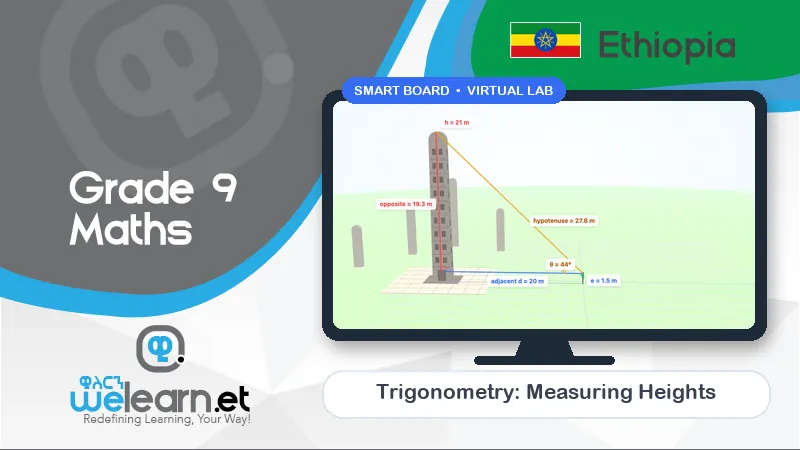
A virtual lab lets the whole class watch the same experiment at the same time. On WeLearn, the lab opens inside the lesson, so it is already next to the notes for the topic. Some examples from the Grade 9–12 curriculum:
| Topic | Virtual lab | What students change |
|---|---|---|
| Grade 10 Physics — light | Optics Bench: Mirrors and Lenses | object distance, focal length, mirror or lens type |
| Grade 10 Physics — electricity | Circuit Builder | battery voltage, resistors, series or parallel |
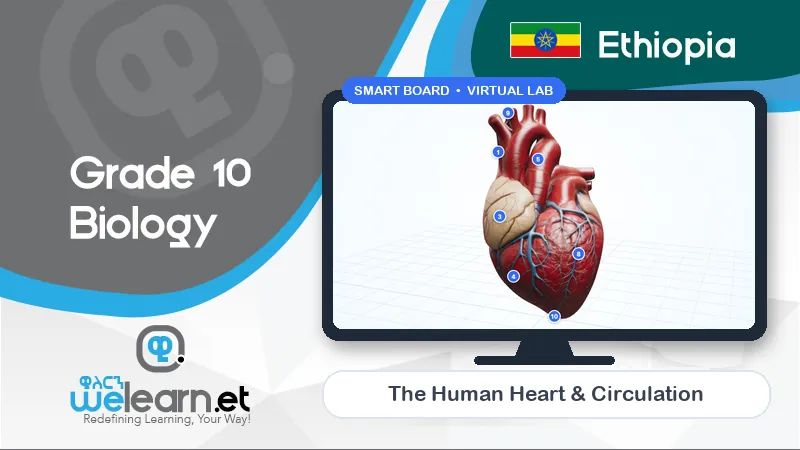
| Grade 9–10 Biology — the heart | The Human Heart | which chamber or vessel to explore, blood-flow path |
| Grade 9 Chemistry — bonding | Water Molecule | rotate, stretch and bend the bonds |
Change one variable at a time and ask a student to read the measurement aloud. Record the results in a table on the board, exactly as you would with real apparatus.
Let students take turns at the board
If you have an interactive TV, call students up to make the next change. If you only have a projector and a laptop, let a student control the mouse while the class tells them what to do. Either way, students are directing the experiment instead of watching you.
Compare the result with the prediction
This is where the learning happens. Ask:
- Who predicted correctly? What reasoning did they use?
- Who was surprised? What did they expect, and why?
- Which formula or rule from the notes explains what we saw?
Then link back to the textbook. Every WeLearn lesson page shows the key terms and formulas for the topic, so students can connect the observation to the theory.
Add something students can hold
A screen is not a substitute for touching real objects. Simple, low-cost materials go a long way:
- cardboard or plywood models of solid figures for surface area and volume,
- a pendulum from string and a stone for oscillations,
- plastic bottles and water for density and pressure.
At Passion Academy we started by cutting solid-figure models from workshop off-cuts for the maths lab. Pairing a physical model with the matching virtual lab works better than either one alone.
Finish with a short exit ticket
End the practical with two or three questions students answer individually before they leave: one that checks the observation, one that checks the explanation. On WeLearn, each unit also has an auto-marked quiz students can take at home.
In short: a practical is predict → observe → measure → explain. A virtual lab on the classroom screen gives every school the "observe and measure" part; your questions provide the rest.